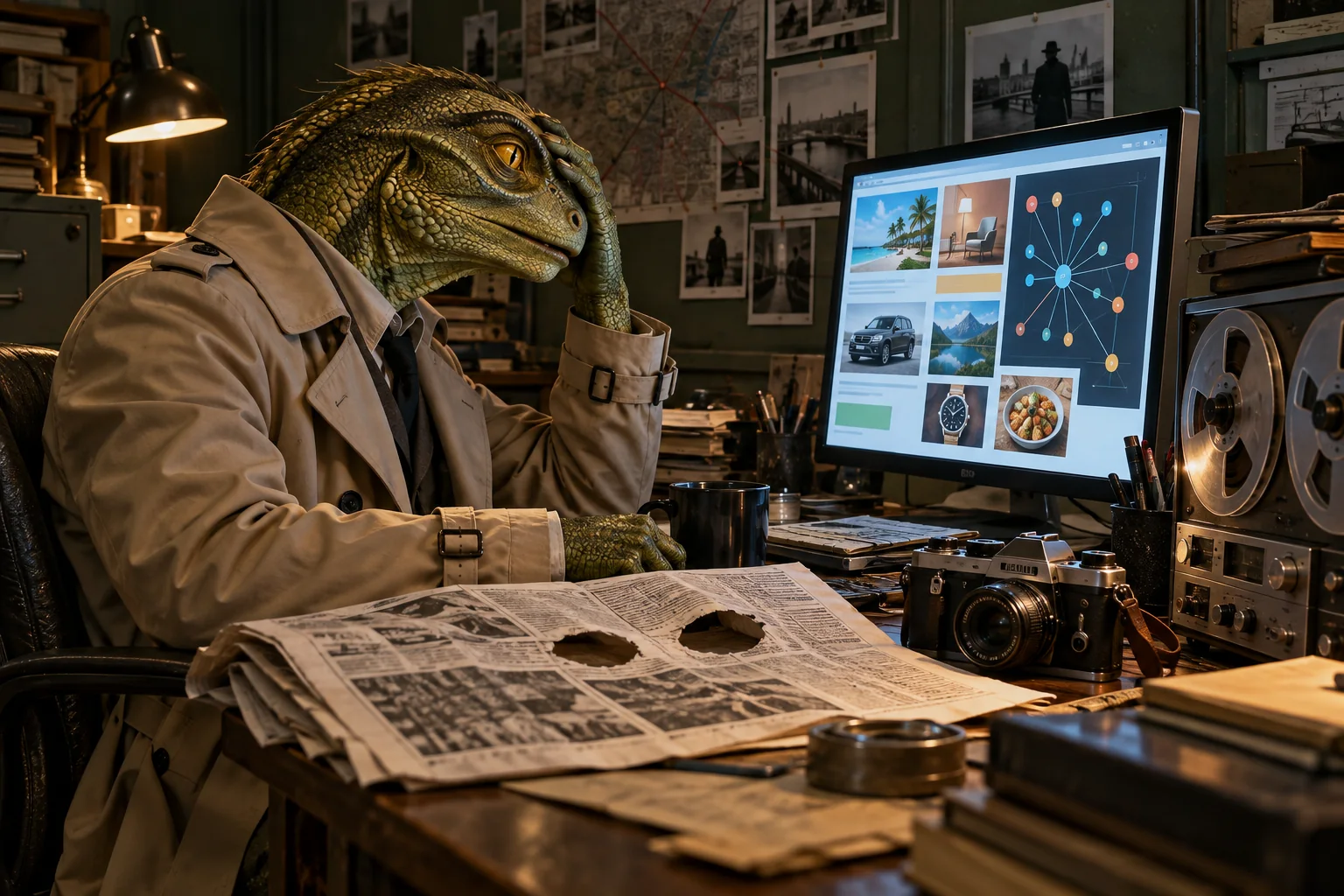
THE OBSERVATION BURROW — The Directorate of Discreet Observation has suspended its annual equipment request after learning that an online advertisement can accomplish tasks for which it traditionally assigns six reptiles and a van.
The discovery has prompted an uncomfortable review of the directorate’s operating model, which still treats access to a newspaper with two eyeholes as a specialist qualification.
“We have spent centuries trying to get inside people’s homes without being noticed,” said deputy director Ivor Nict. “The advertising industry appears to have arranged an invitation, a budget, and a dashboard.”
An emergency demonstration was held in the agency’s training room. Before the instructor had finished explaining the distinction between ordinary advertising, commercial tracking, and malicious exploitation, three senior officers had requested access to the sales team.
The instructor has asked that this not be counted as successful completion of the course.
The directorate is particularly troubled by the business vocabulary. Activities it has always described as surveillance are routinely presented elsewhere as audience insight. Following somebody from one location to another becomes attribution. A detailed account of someone’s habits becomes a profile, which is apparently more acceptable if exported as a spreadsheet.
“Our budget submission said we wanted to watch people,” Nict said. “That was evidently a presentation error.”
The modernization program has therefore begun with a change of name. The Directorate of Discreet Observation is now the Department of Relevant Experiences. Its interrogation rooms have been renamed feedback suites, although the legal team has stressed that this changes none of the relevant legal problems.
There are operational complications. An advertising platform asked the agency to describe its intended audience. The first application said “everyone.” The second said “everyone, but individually.” Neither offered a campaign end date.
A procurement officer then asked whether the council actually needed to collect more information. Its existing archive contains four thousand years of observations that nobody has read, including a detailed account of a merchant buying sandals in 814 and a follow-up establishing that he wore them.
The archive’s search function is a retired basilisk named Martin.
Nict acknowledged the problem but said collecting less would send the wrong signal about the agency’s ambitions. Instead, it will purchase an analysis system to summarize the material, followed by a second system to explain why the first summary is actionable.
The van will remain in service pending consultation with the transport union.
Asked whether any of this made the public safer, the directorate supplied a chart showing a substantial increase in impressions.